
How to Get Rid of Bots in Affiliate Marketing: A Step-by-Step Guide

Bots are a common challenge in affiliate marketing and digital advertising, consuming ad budgets and affecting campaign results. However, bot traffic is a manageable problem. By using the right strategies and dedicated tools, such as Voluum’s Anti-Fraud Kit, you can detect, minimize, and control bot activity in your campaigns.
What Tools Does Voluum Offer to Combat Bot Traffic?
This guide will be based on the set of tools, known as Anti-Fraud Kit, that Voluum provides to help you get rid of bot traffic. Some of the tips described here can be applied without having access to this kit, but it could require more manual labor.
Voluum Anti-Fraud Kit has been covered in one of our previous articles. In short: it consists of various tools and metrics designed to detect typical bot behavior and provide legitimate proof for chargeback procedures. If you want to know the details, read the Anti-Fraud Kit document from our knowledge base.
At this point you still may have some questions. Namely:
- How many suspicious visits is too many?
- Should I wait some time or act immediately?
- When does a fast app installation become too fast?
- What can I do?

The last question is the most important one. Knowing that you have bots is one thing, getting rid of them – another. This guide covers them both.
How Can You Recognize Bot Traffic in Your Campaigns?
When you start using the Anti-Fraud Kit feature most probably you will notice a certain level of suspicious traffic in your campaign funnels. A small portion of bot traffic is something to be expected. The problem arises when bot traffic makes it difficult to optimize your campaigns or clouds the overall picture.
Before digging into more detailed reports, think about your audience and try to predict some metric values:
- Do you anticipate a lot of traffic coming from VPN services? In that case, the Known data centers metric might flag a lot of traffic you expect and want.
- Do you advertise on websites considered to be of poor reputation? In that case, the Badly ranked websites metric may not be of use to you.
- Do you know that there might be some content-scanning programs on web pages that you advertise on (PHP, Java, or other)? In that case, the User agent – Library robots metric will flag those non-malicious robots.
- Does your application require large amounts of data to download? In that case, Time-To-Convert metrics might not accurately show outliers, as most install times will shift towards the High TTC threshold.
All this is a matter of your expertise. Maybe you will come to a conclusion that you can disable certain metrics. Or that you will always see some part of your traffic marked as suspicious.
After this step it is time to go deeper and try to locate exact sources of the suspicious traffic.
How Do You Identify the Source of Bot Traffic?
To identify the source of your suspicious traffic, create a specific report for a campaign element with the most suspicious traffic or a significant amount of conversions below the Low TTC threshold. Then drill-down into data.
The aim is to identify one single category for which an amount of invalid traffic is significantly higher than for other categories.
Take a look at the example below. A specific report was created:
Note that AADIX ISP generates over 60% of suspicious clicks with no conversions. You can use a rule-based path to redirect all traffic using this ISP outside of your campaign funnel.
How Can You Set Up Bot Traps (Honeypots) to Catch Bots?
The proactive way of catching bots is by setting a trap for them. The industry knows this trick as ‘honeypot’. And coincidentally, Voluum has the feature that is named exactly like that and does the same thing.
The idea is simple: you embed a link in your landing page’s code that is invisible to real users but visible to bots, making it easier to identify bot behavior with Voluum’s Honeypot feature.
Without the Honeypot feature, you can use any link that leads outside of your campaign funnel. With it, you can use our special code to count all those invisible clicks and identify the source behind them in Voluum reports.
You can learn more about this feature by reading the Honeypot article from our knowledge base.
What Steps Can You Take to Eliminate Bot Traffic?
After pinpointing the source of the suspicious traffic there are several actions you might take to eliminate it from your funnels.
How Do You Block Bot Traffic at the Source?
Go to your traffic source platform. Depending on the traffic targeting options they provide, try to exclude these sources from buying (apart from IP address, which you can block in Voluum). This is the best solution, as not only will it eliminate suspicious traffic from your funnels, but at the same time, it will save you money you were spending on it.
How Can You Redirect Suspicious Traffic in Voluum?
If you have trouble with excluding sources of suspicious traffic that you have located in Voluum, you can try to use Rule-based paths to redirect this traffic outside your funnels.
Rule-base paths give you plenty of options to redirect traffic to specific offers based on traffic characteristics, such as country or a device type. Create a rule-based path and direct traffic with the highest amount of suspicious traffic to a dummy offer.
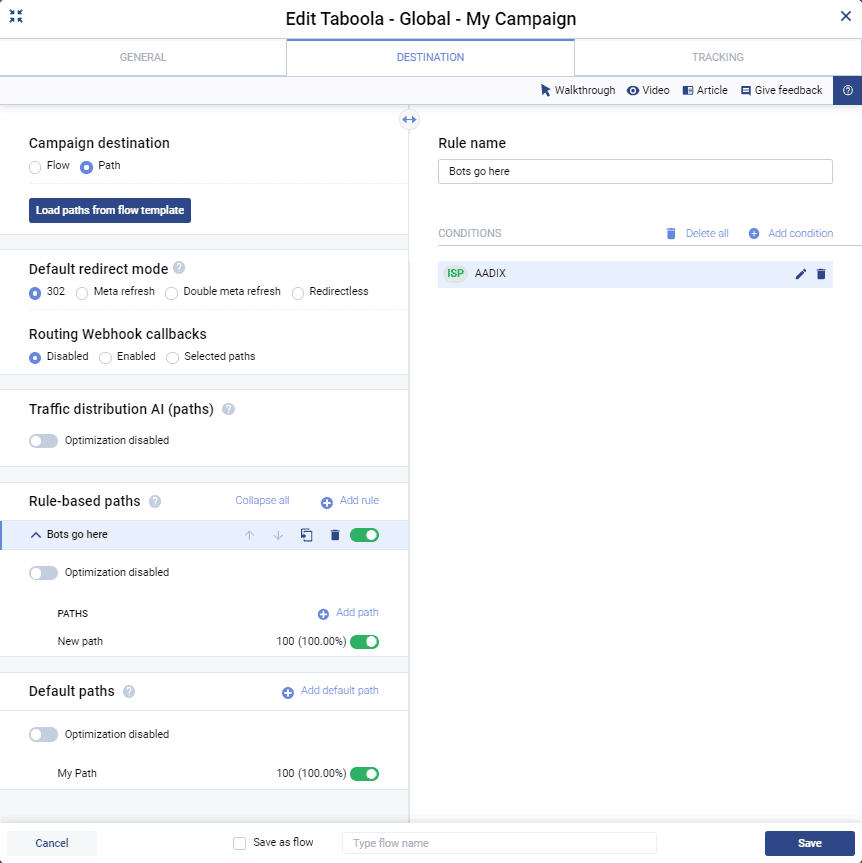
Read the Adding a Rule-based path article to learn more.
You will still pay for this traffic, but at least it will not skew your stats and damage your reputation in an affiliate network platform.
How to Block Bot Traffic by IP or User Agent in Voluum?
Voluum’s reporting makes it easy to identify suspicious IP ranges or user agents; with built-in blocking tools, you can efficiently keep harmful traffic out of your funnels.
If you want to learn how to block an IP range in Voluum, read the IP / UA Filtering: Applying a Filtering Rule article.
How Can You Use Your Landing Page to Reduce Bot Traffic?
Apart from using the Honeypot feature, there are other things you may do on your own.
Consider using captcha-type solutions on a pre-landing page. This one is tricky because this might deter real users from clicking on your offers and you have to balance your problems with the invalid traffic with a potential loss of conversions.
How Can You Use Traffic Logs to Analyze and Combat Bot Traffic?
Creating a traffic log gives you an opportunity to analyze raw visit data to learn more about suspicious visits that have occurred.
The traffic log contains the low-level data of each click with a date. It comes in the form of a CSV file. You can import it to any spreadsheet editing software such as Microsoft Excel to perform further in-depth analysis and potentially make claims to your traffic source platform.
Read the Traffic Log: Overview article to learn more.
How Do Rules Help Prevent Bot Traffic from Hurting Campaigns?
Even if you don’t catch bots red-handed meddling with your traffic, you can still protect yourself from their actions. As bots like to artificially over-inflate view numbers (impressions or visits), it is possible to pause any placements or whole campaigns with iCTR or CTR and little to no conversions using rules.
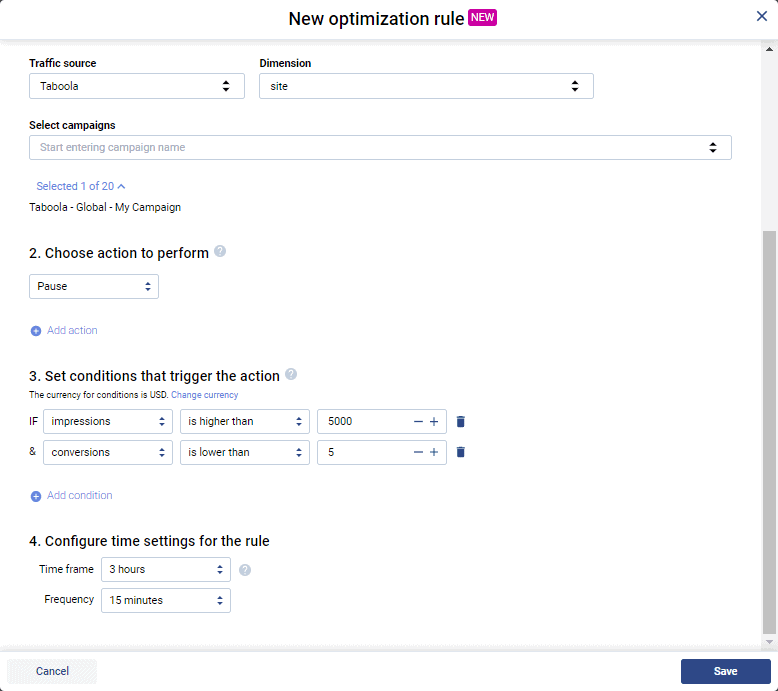
Rules are your ally when it comes to fighting bot traffic. Rules catch and take action or alert you when things outside your typical traffic pattern happen, such as unusually high CTR or impression count. Learn this pattern and you will know when someone, or rather something, is messing with your campaigns.
Why Are Whitelists and Blacklists Effective Against Bot Traffic?
This is affiliate marketing 101 but still worth mentioning. Creating whitelists with proven placements or publishers and running whitelist campaigns makes you immune to many problems with bot traffic.
Similar things can be said about blacklists: use them to exclude possible bot-infested sites. Note that you can apply whitelists and blacklists in most traffic sources, as well as in Voluum rules.
How Should You Manage Ongoing Bot Traffic in Affiliate Marketing?
The war with bots is a war for a better industry. You can fight them just to limit your losses and increase revenue. But you can also promote good business practices by choosing only reputable traffic sources that actively fight bot traffic and react to your claims immediately. Only then we will all have a chance to work in a better industry.
Remember that you may not ever be able to completely get rid of bots in the same way as you probably will never be able not to get sick.
Bot traffic is the common cold of problems. It will be here, mildly annoying, occasionally worse, but never life-threatening. Just drink your chicken soup, get better, and work towards a better industry.
With Voluum Anti-Fraud Kit, we can be closer to it than ever.
Frequently Asked Questions
Question: How can you identify bot traffic in affiliate marketing?
Use dedicated tools like Voluum’s Anti-Fraud Kit to monitor key metrics such as known data centers, user agents, and conversion times. Create detailed reports to uncover categories or sources responsible for suspicious activity.
Question: What actionable steps can help eliminate bot traffic?
You can stop suspicious sources at the traffic platform, redirect or block them within Voluum, use honeypot traps, set up IP and user agent filters, add CAPTCHA to landing pages, and create whitelists or blacklists to refine your traffic sources.
Question: What is a bot trap or honeypot in ad tracking?
A bot trap—such as Voluum’s Honeypot feature—involves placing an invisible link on your landing page that human users won’t see or click, but bots will. Clicking this link exposes them, making it easier to identify and filter out bot traffic.
Question: Why should you use professional tools like Voluum to fight bot traffic?
Professional tools offer automation, advanced detection, actionable reporting, and quick blocking or redirecting of invalid traffic, saving you time and safeguarding your budget.
Question: Can you ever fully eliminate bot traffic?
You may never be able to eliminate all bot traffic, but with the right measures and tools, you can manage it effectively and keep its impact minimal on your campaigns.



 Facebook
 Telegram