
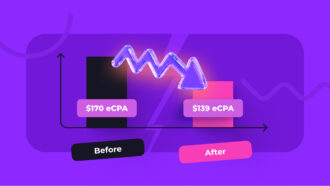

The Problem Was Attribution, Not Media Buying
Vicious Marketing was tasked with auditing an operator of a UK-based online casino, one of the bigger ones. The operator was not in trouble by conventional measures. They were generating 3,000 first-time depositors every month. The issue was structural and largely invisible without the right data to surface it.
Brand-intent traffic was being captured by third-party affiliates and resold back to the operator at a markup. Players who could have been acquired organically were being routed through paid channels because no organic infrastructure existed. High-cost traffic sources that looked acceptable in last-touch reporting were absorbing budget that cleaner attribution would have redirected elsewhere. None of this was visible because there was no end-to-end tracking in place.
When Vicious Marketing audited the system, the diagnosis was clear: the $170 eCPA was not a media buying problem. It was an attribution problem.
Tracking First, Everything Else Second
Before any structural changes were made, Vicious Marketing implemented full server-to-server tracking through Voluum, from first touch all the way through to first-time deposit. That was the precondition for everything that followed.
With real attribution data in place for the first time, the operator could see exactly which entry points were producing players and at what cost. Budget reallocation began within the first month. From there, Vicious Marketing rebuilt the acquisition system layer by layer: brand keyword recapture, a satellite site network, money page restructuring, LLM and AI search visibility, and a full SEO infrastructure. Each layer was measurable because Voluum was underneath all of it.
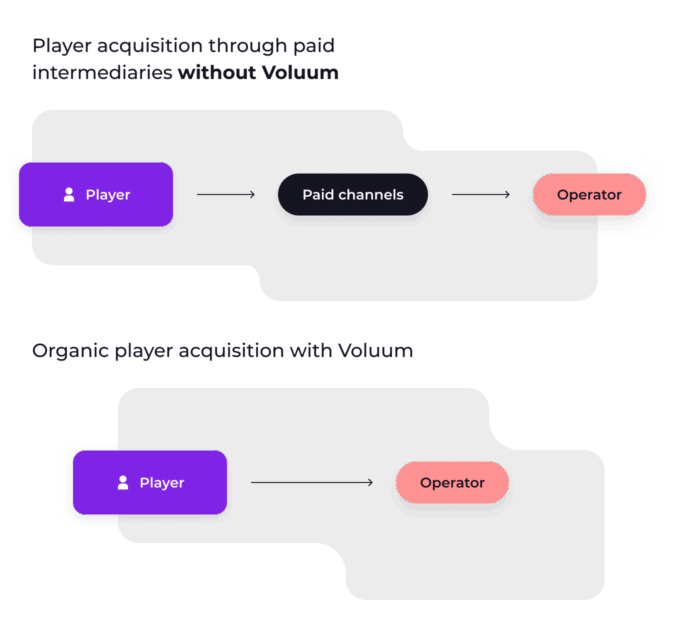
This is the core point of the engagement: tracking was not the reporting tool at the end of the process. It was the precondition for every efficiency gain that came after it.
The Results
By month five, eCPA had fallen from $170 to $139.40, an 18% reduction. FTD volume grew from 3,000 to 3,659 per month without any increase in spend. Year one net saving after all fees came to $853,769. From year two onward, monthly gross savings reached $1,343,415. Over three years, the total ROI on the engagement was 329%.
The gains did not come from spending more or switching platforms. They came from finally being able to see what was working, and acting on it.





 Facebook
 Telegram