

iGaming affiliate marketing represents one of the most lucrative verticals in the digital marketing ecosystem. Its popularity is growing, and iGaming makes its way to the masses as just another form of entertainment.
iGaming involves promoting online gambling platforms and earning commissions through player referrals, encompassing everything from online casinos and poker rooms to sports betting sites and lottery platforms.
With the global iGaming market projected to reach $107.6 billion in 2025 and continuing to grow at an impressive rate, affiliate marketers are often tempted to join the accelerating bandwagon. However, iGaming affiliate marketing comes with its own set of challenges that need to be understood to make any venture profitable.
What is iGaming Affiliate Marketing?
iGaming affiliate marketing is a performance-based partnership model in which third-party publishers — known as affiliates — promote online gambling platforms and earn commissions based on the actions of the players they refer. Those actions can range from simple account registrations to first-time deposits or ongoing wagers, depending on the commission structure in place.
At its core, the model works like this: an affiliate joins an iGaming operator’s affiliate program or network, receives a unique tracking link, and drives traffic to the operator’s platform through content, paid ads, SEO, social media, or email marketing. When a referred visitor completes a qualifying action — registering, depositing, or playing — the affiliate earns a commission.
What separates iGaming affiliate marketing from general affiliate marketing is the depth of tracking, the complexity of commission models, and the regulatory weight that comes with promoting gambling products. Unlike promoting a software tool or an e-commerce product, iGaming affiliates operate in a space where player lifetime value, responsible gambling obligations, and jurisdiction-specific advertising rules all directly affect campaign profitability.
For operators, affiliate marketing is one of the most efficient player acquisition channels available. Rather than spending upfront on broad advertising campaigns with uncertain returns, operators pay only for results — a model that aligns incentives on both sides of the partnership.
For affiliates, iGaming represents one of the highest-earning verticals in performance marketing, with revenue share deals that continue paying out for as long as referred players remain active.
Understanding iGaming: The Foundation
iGaming, short for internet gaming, refers to any form of online gambling where real money is wagered. This includes:
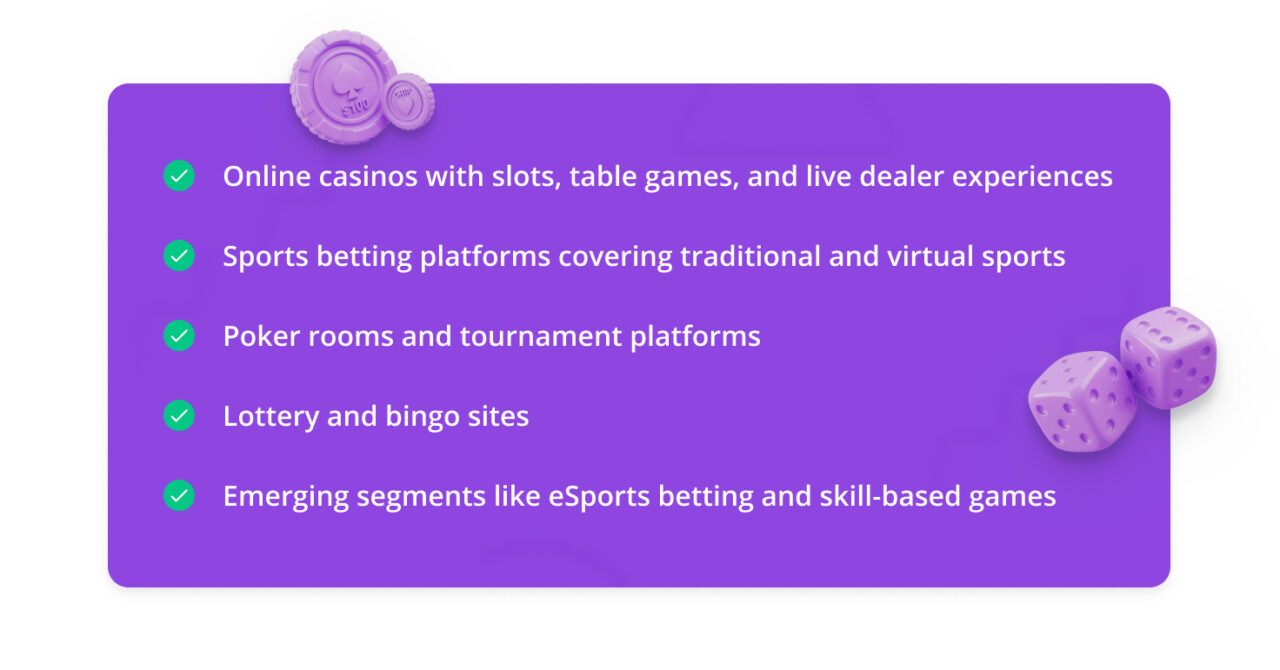
There are edge-cases, where games are played like normal casino games but without any real money being exchanged. This includes:
- Social casinos
- Some forms of fantasy sports betting
The industry’s rapid growth stems from several factors: widespread smartphone adoption, improved internet infrastructure, increased trust in online payment systems, and the gradual legalization of online gambling in various jurisdictions.
The last part comes with an asterisk: iGaming is often used as a way to access gambling opportunities in jurisdictions where it is prohibited. We’ll talk about the complexity of the legal framework later.
Benefits of iGaming Affiliate Marketing
For those willing to invest the time to understand the vertical, iGaming affiliate marketing offers a combination of advantages that few other niches can match.
High earning potential. Commission rates in iGaming are among the most competitive in all of affiliate marketing. Revenue share arrangements typically range from 25% to 50% of net gaming revenue, and top-performing affiliates can negotiate even higher tiers. CPA deals for first-time depositors can reach hundreds of dollars per player, particularly in high-value markets like the US, UK, and Australia.
Recurring passive income. Unlike most affiliate verticals where a conversion earns a one-time fee, iGaming revenue share models keep paying for the lifetime of a referred player. A player acquired today may generate commissions for months or years, transforming successful campaigns into long-term income streams.
Scalability. Affiliate marketing in iGaming scales efficiently. A well-ranked SEO article, a YouTube channel, or a profitable paid traffic campaign can generate referrals around the clock without requiring proportional increases in effort. The infrastructure is already in place — affiliates simply need to maintain and expand their traffic channels.
Diverse niches and audiences. The iGaming vertical covers sports bettors, casino players, poker enthusiasts, eSports fans, and lottery players. This breadth allows affiliates to specialize in communities they already understand or to diversify across multiple sub-niches to reduce revenue concentration risk.
Global reach. Online gambling operates across dozens of regulated markets worldwide. Affiliates can target audiences in specific jurisdictions, adapt their content to local languages and sports, and capitalize on market openings as new jurisdictions regulate iGaming. The emergence of new regulated markets — including various US states — regularly creates fresh opportunities.
Low barrier to entry. Getting started as an iGaming affiliate requires relatively little upfront capital. An affiliate can begin with a content website, a YouTube channel, or even social media accounts, and sign up with affiliate programs at no cost. The main investment is time, content quality, and traffic development.
Alignment with a growing market. With the global iGaming market projected to reach $107.6 billion in 2025 and mobile gambling alone approaching $95 billion, affiliates are operating in an industry with strong structural tailwinds rather than fighting against a declining market.
The iGaming Affiliate Marketing Ecosystem
In iGaming affiliate marketing, affiliates act as intermediaries between iGaming operators and potential players. They serve as an additional advertising channel for operators that often rely on their own SEO efforts and have their own media buying teams.
Key Players in the Ecosystem
iGaming Affiliates can be individuals, companies, or large networks specializing in online marketing. They typically:
- Own websites, blogs, social media channels, or email lists focused on gambling, sports, or entertainment
- Possess strong marketing skills and deep industry knowledge
- Build trust and engagement with audiences who are potential players
- Create and distribute content that attracts and converts prospects
iGaming Operators are platforms or entities that host games. They offer various commission structures and marketing support to attract quality affiliates.
Affiliate Networks and Platforms serve as intermediaries, connecting affiliates with operators while providing tracking, reporting, and payment processing services.
They all need to talk with each other and exchange data, and here’s where Voluum shows its strength. By introducing universally accepted standards as postback, it facilitates reliable data tracking, promotes honesty and increases the overall ROI of every party involved.
Revenue Models and Commission Structures
The iGaming vertical offers several distinct payout models, each with unique advantages:
Cost Per Lead (CPL)
The most straightforward model where affiliates earn a fixed commission for each qualified lead. In iGaming, this typically means a new player who registers, verifies their account, and logs in for the first time. CPL offers predictable earnings and is ideal for affiliates focusing on volume.
Cost Per Acquisition on First-Time Deposit (CPA FTD)
This prevalent model rewards affiliates when referred players make their first deposit. Payouts can be fixed amounts or percentages of the initial deposit, generally offering higher commissions than CPL due to the higher value action required.
Revenue Share
The most lucrative long-term model, where affiliates receive a percentage of the net revenue generated by their referred players over time. This creates a passive income stream but requires affiliates to focus on player quality and lifetime value rather than just volume.
Hybrid Models
Many operators now offer combination approaches, providing both initial CPA payments and ongoing revenue share, allowing affiliates to benefit from both immediate and long-term player value.
iGaming Traffic Types
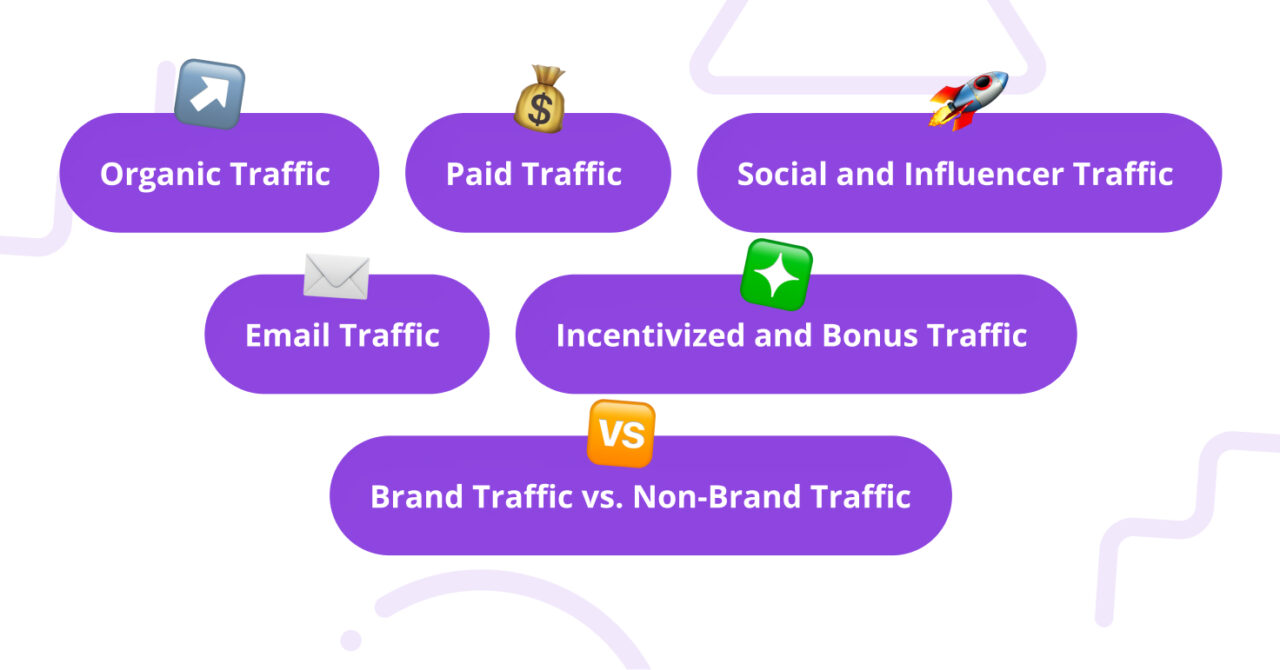
Not all traffic is created equal in iGaming. Understanding the distinction between different traffic types is fundamental to building campaigns that operators will value and that generate commissions worth earning. Broadly speaking, iGaming traffic can be categorized along two dimensions: its origin and its quality.
Organic Traffic
Organic traffic arrives through unpaid channels — primarily search engines, but also direct visits and referral links from other websites. For iGaming affiliates, organic search traffic is often the most valuable type because it reflects genuine user intent. Someone searching “best online casino in New Jersey” or “how to bet on NFL games” is already primed to engage with gambling content and convert into a depositing player. Building organic traffic through SEO takes time but tends to produce the most sustainable, highest-converting audiences.
Paid Traffic
Paid traffic is generated through advertising — display ads, native ads, push notifications, pop-unders, paid search, and social media ads. Paid channels offer speed and scalability that organic methods cannot match, but they come with costs that must be carefully balanced against player lifetime value. Paid iGaming traffic also faces stricter platform restrictions; Google, Meta, and other major ad networks impose licensing and geo-targeting requirements on gambling advertisers.
Social and Influencer Traffic
Traffic sourced from social media platforms, YouTube channels, Twitch streams, and influencer partnerships. This type of traffic tends to build communities around gambling content — casino game reviews, sports betting tips, poker strategy — and can generate loyal audiences with strong referral rates. The challenge is compliance: many jurisdictions have strict rules about gambling advertising on social platforms.
Email Traffic
Email lists built around gambling, sports, or finance audiences can be exceptionally effective for iGaming promotions. Players acquired through email marketing tend to have higher engagement because they have opted in to receive content. However, email marketing in gambling requires careful list hygiene, regulatory compliance, and relevance to the audience’s existing interests.
Incentivized and Bonus Traffic
Traffic driven by bonus offers, free spin promotions, or no-deposit bonuses. While this type of traffic can generate large volumes of registrations quickly, operators increasingly scrutinize it for quality. Players who sign up purely for bonuses often have lower lifetime value and higher churn rates, which affects both operator profitability and affiliate commissions under revenue share arrangements.
Brand Traffic vs. Non-Brand Traffic
A distinction worth understanding: brand traffic consists of users who already know the operator and search for it by name. Most affiliate programs prohibit brand bidding — running ads against an operator’s own brand keywords — to avoid cannibalization. Non-brand traffic, which introduces new users to an operator they may not have encountered before, is what affiliate programs are designed to generate and reward.
Types of iGaming Traffic Sources
Affiliates have access to a wide range of traffic acquisition channels, each with its own cost structure, audience profile, and suitability for iGaming offers. The most successful affiliates rarely rely on a single source; instead, they build multi-channel acquisition strategies that reduce dependency on any one platform or algorithm.
Search Engine Optimization (SEO)
SEO remains the cornerstone traffic source for most established iGaming affiliates. High-ranking pages for casino reviews, sportsbook comparisons, bonus round-ups, and strategy guides generate consistent, intent-rich traffic with no ongoing cost per click. The trade-off is time: building domain authority and ranking for competitive iGaming keywords can take months or years. Affiliates who invest in content quality, technical SEO, and link building, however, often enjoy some of the most profitable and defensible positions in the market.
Paid Search (PPC)
Pay-per-click advertising on Google and Bing allows affiliates to appear for high-intent search queries immediately. Paid search works best for targeting commercially oriented keywords where organic competition is fierce, or for capturing demand in newly regulated markets before organic rankings are established. Compliance is non-negotiable: search engines require proof of operator licensing before approving gambling-related ads in regulated markets.
Display and Native Advertising
Display ads — banners, interstitials, and native content units served across third-party websites — give affiliates access to broad audiences beyond search. Networks like Taboola, Outbrain, and specialist iGaming ad networks provide access to gambling-adjacent audiences on sports news, entertainment, and general lifestyle sites. Native ads in particular can perform well because they blend into editorial environments, reducing banner blindness.
Push Notifications
Push notification traffic has become increasingly popular in iGaming performance marketing. Affiliates buy push notification inventory from ad networks, reaching users who have opted in to receive browser or app alerts. This format allows for highly targeted, time-sensitive messaging — particularly effective around major sporting events or new game launches.
Pop-Under and Pop-Up Ads
Pop-under traffic, where an ad loads behind the user’s current browser window, is a volume-heavy, cost-effective format common in iGaming campaigns, particularly for tier-2 and tier-3 geo-targeting. The format carries a lower quality ceiling than intent-based channels but can be profitable when matched with the right offers and landing pages.
Social Media
Facebook, Instagram, TikTok, and Twitter/X all host iGaming-adjacent audiences, though each platform imposes its own advertising restrictions on gambling content. Affiliates often use social media not for direct gambling advertising but to build communities — sports tipster groups, casino review pages, poker discussion channels — and then funnel engaged followers toward affiliate links through organic content.
Content and Video Platforms
YouTube, Twitch, and podcast platforms are increasingly important traffic sources for iGaming affiliates. Casino game streamers, sports betting tipsters, and poker coaches attract large, engaged audiences who trust their recommendations. Video content also tends to rank in Google search, giving affiliates an additional organic visibility channel alongside their written content.
Email and CRM Marketing
As discussed in the traffic types section, owned email lists give affiliates a direct line to engaged audiences that no algorithm change can take away. Building an email list requires an upfront content investment but produces one of the highest-quality traffic channels available in iGaming.
Affiliate Networks as Traffic Intermediaries
Beyond direct traffic generation, affiliates can also access audiences by working within affiliate networks that aggregate offers and traffic. Some affiliates act as sub-affiliates within larger programs, driving traffic to a network’s pooled offers rather than building their own direct operator relationships.
Affiliate Marketing Platforms for iGaming
Perhaps the single most important infrastructure decision in iGaming affiliate marketing is the choice of platform used to track, manage, and optimize campaigns. This applies whether you are an operator building a partner program or an affiliate managing traffic across multiple offers. The right platform does far more than log clicks: it attributes conversions accurately, enforces commission rules, detects fraud, and generates the reporting both sides need to make data-driven decisions.
What to Look for in an iGaming Affiliate Platform
The iGaming vertical imposes specific demands on affiliate technology that generic marketing software cannot always meet. Before evaluating platforms, operators and affiliates should understand the key capabilities that separate purpose-built iGaming solutions from general-purpose affiliate tools.
Server-to-Server (S2S) Postback Tracking
iGaming transactions — registrations, deposits, wagers — happen on the operator’s platform, not on a webpage the affiliate controls. Cookie-based tracking, the standard in e-commerce affiliate marketing, is insufficient for reliably attributing player actions that occur hours or days after a first click. Server-to-server postback tracking passes conversion data directly between systems without relying on a player’s browser, producing far more accurate attribution. Any serious iGaming affiliate platform must support this natively.
Support for iGaming-Specific Commission Models
CPA, RevShare, and hybrid combinations are iGaming industry standards that generic affiliate platforms often handle poorly or not at all. Purpose-built iGaming platforms support net gaming revenue (NGR) calculations, post-deposit commission adjustments, negative carryover policies, and multi-tier commission structures out of the box.
Real-Time Reporting and iGaming KPIs
iGaming operators and affiliates need to monitor metrics that are specific to the gambling world: registration-to-deposit ratios (Reg2Dep), net gaming revenue, gross gaming revenue (GGR), player lifetime value (LTV), and churn rates. Platforms designed for iGaming expose these metrics natively rather than requiring complex custom reporting configurations.
Fraud Detection
iGaming affiliate fraud — motivated traffic, fake registrations, self-referrals, and bonus abuse — can erode operator margins and trigger affiliate program penalties. Platforms with built-in fraud detection tools, including IP analysis, device fingerprinting, KYC verification hooks, and conversion validation rules, are essential for maintaining program integrity.
Multi-Brand and Multi-Currency Support
Many iGaming operators run multiple brands across different jurisdictions. Affiliate platforms need to handle multi-brand structures, regional commission variations, and payouts in multiple currencies including cryptocurrency.
Leading iGaming Affiliate Platforms
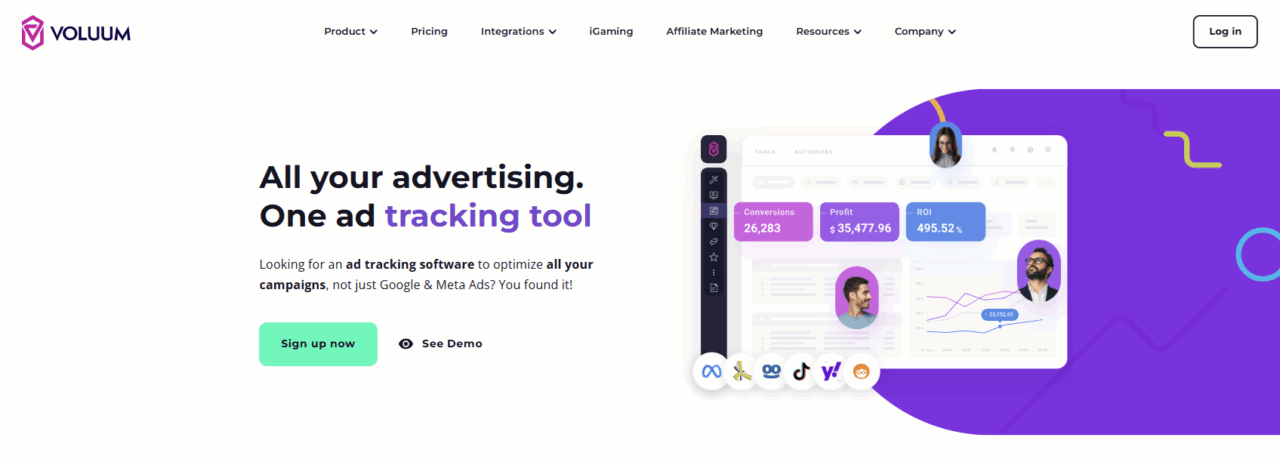
Voluum is a professional-grade affiliate tracker designed to handle the complexity of iGaming campaigns from the affiliate side. Its core strength is data consolidation: Voluum pulls campaign data from multiple traffic sources and affiliate programs into a single reporting environment, eliminating the manual work of aggregating performance data across dozens of spreadsheets. For iGaming affiliates managing traffic from SEO, paid search, display, and push notifications simultaneously, this unified view is invaluable.
Voluum’s automation engine operates on if/then logic, allowing affiliates to set up rules that manage routine campaign decisions automatically: pausing underperforming placements, triggering alerts when conversion rates drop, adjusting bids based on traffic quality signals, and sending bot traffic notifications. This level of automation is particularly useful in iGaming, where traffic quality varies significantly across sources and placements.
The platform’s postback-based S2S tracking ensures accurate attribution for iGaming conversions that happen asynchronously from the initial click, making it a reliable foundation for affiliate campaigns where precise conversion data directly affects commission earnings.
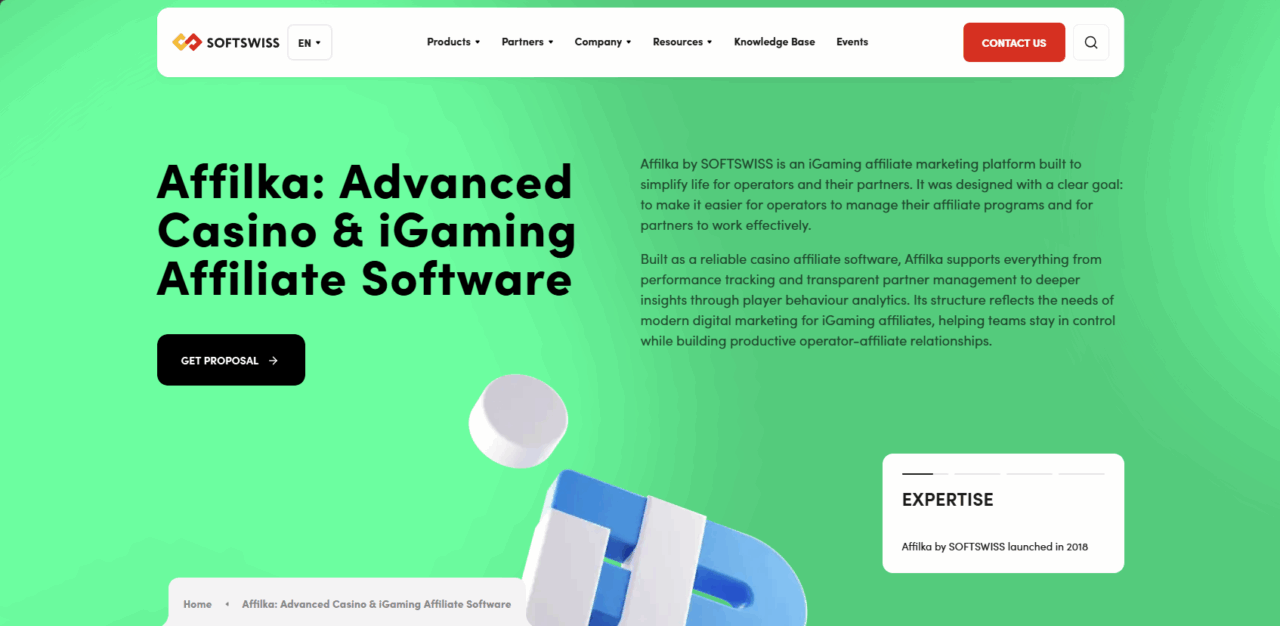
Affilka is an affiliate management platform built specifically for iGaming operators. It is the operator-facing counterpart to affiliate tracking tools — the software an operator uses to recruit, manage, and pay its affiliate partners. Affilka is used by well-known brands including BitStarz, Parimatch, and Money Jam Partners, and it supports over 260 currencies in both fiat and cryptocurrency.
Key capabilities include a flexible commission plan constructor that supports CPA, RevShare, and hybrid models; player-level reporting that lets operators and affiliates see exactly which players were referred by which affiliate; integrated payment processing through Neteller, Skrill, and wire transfer; and a sub-affiliate structure that enables multi-tier partner arrangements. Affilka also offers a frontend API for full white-label customization.
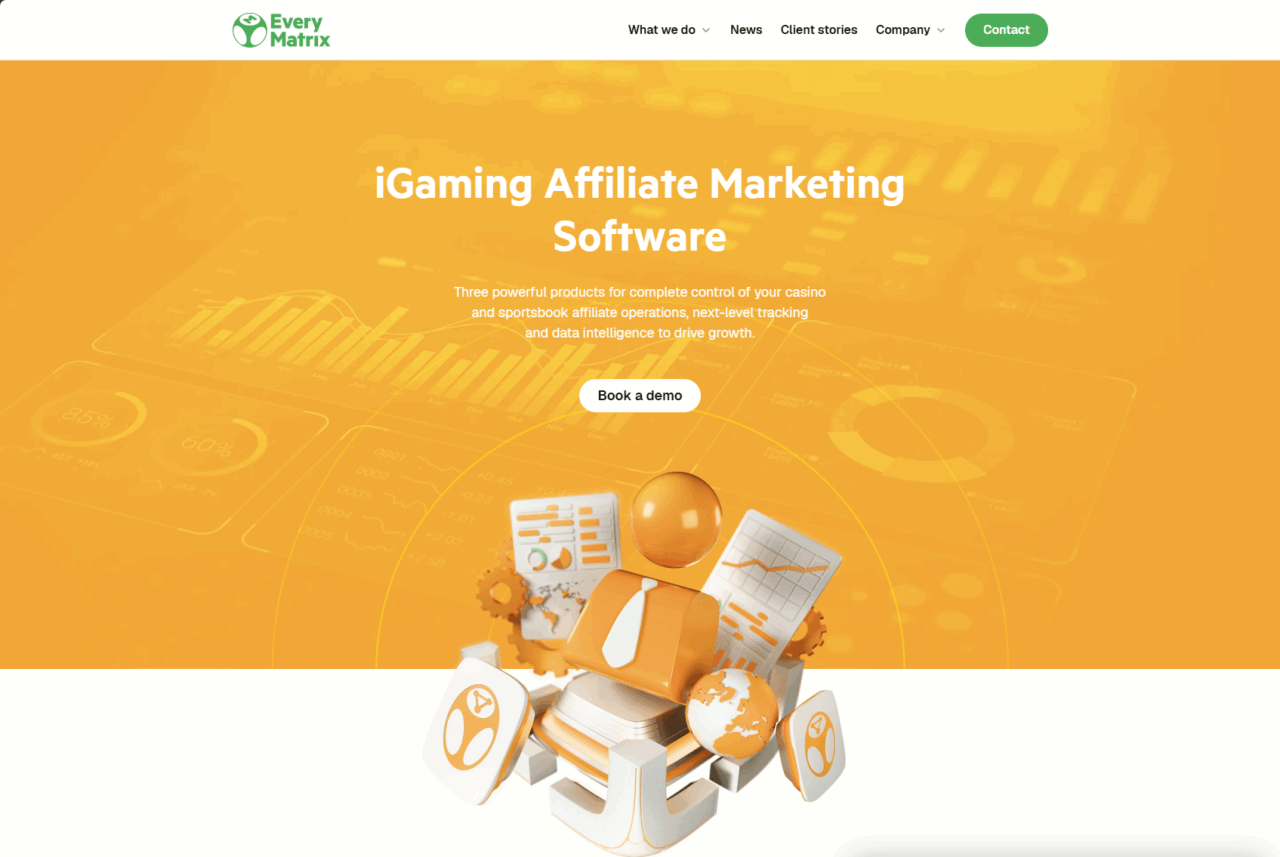
PartnerMatrix is a comprehensive affiliate management solution built on top of the EveryMatrix iGaming platform. With over 100,000 affiliates and 300+ operators on the platform, PartnerMatrix handles the full lifecycle of an iGaming affiliate relationship — from onboarding and creative delivery to real-time performance monitoring and multi-currency payouts across 100+ countries in 150+ currencies.
The platform is notable for its 24/7 customer support, its real-time dashboard that tracks new players and campaign performance, and its ability to handle multi-brand structures for operators running several casino or sportsbook products under one affiliate program umbrella. PartnerMatrix is best suited to operators already running on the EveryMatrix infrastructure.
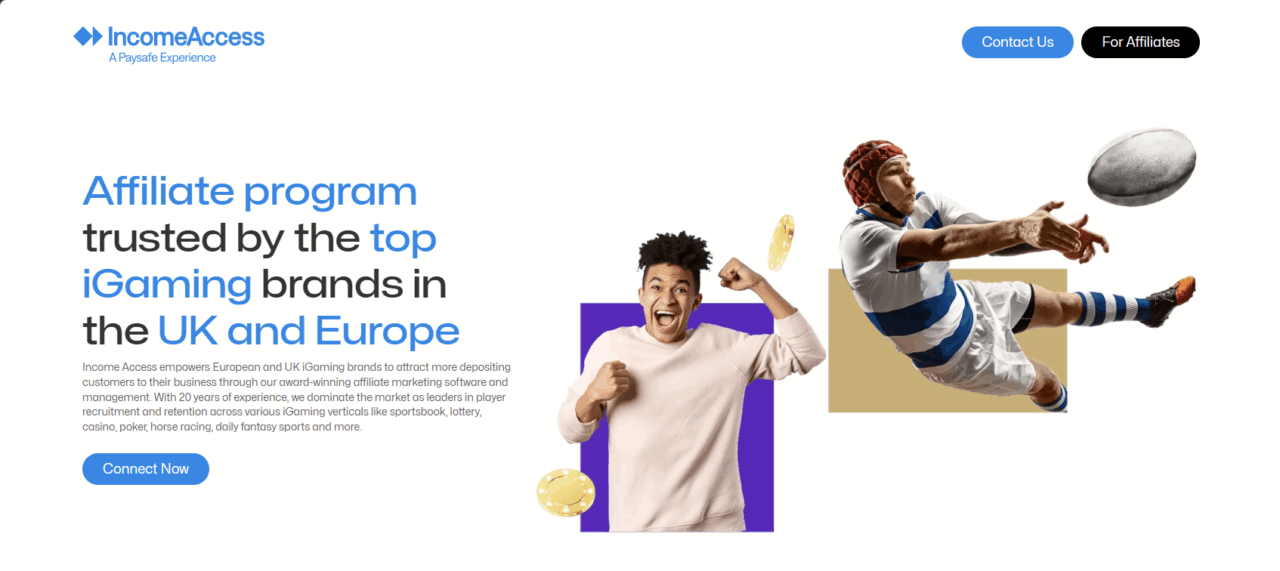
One of the longest-established names in iGaming affiliate management, Income Access provides both affiliate tracking software and a managed affiliate network. It serves casino, sportsbook, poker, bingo, lottery, and forex brands, offering operators a dual option: use the software to run their own program or tap into Income Access’s established network of affiliate partners. The platform supports comprehensive customer acquisition tracking across online and offline channels, making it particularly relevant for operators with both digital and land-based presences.
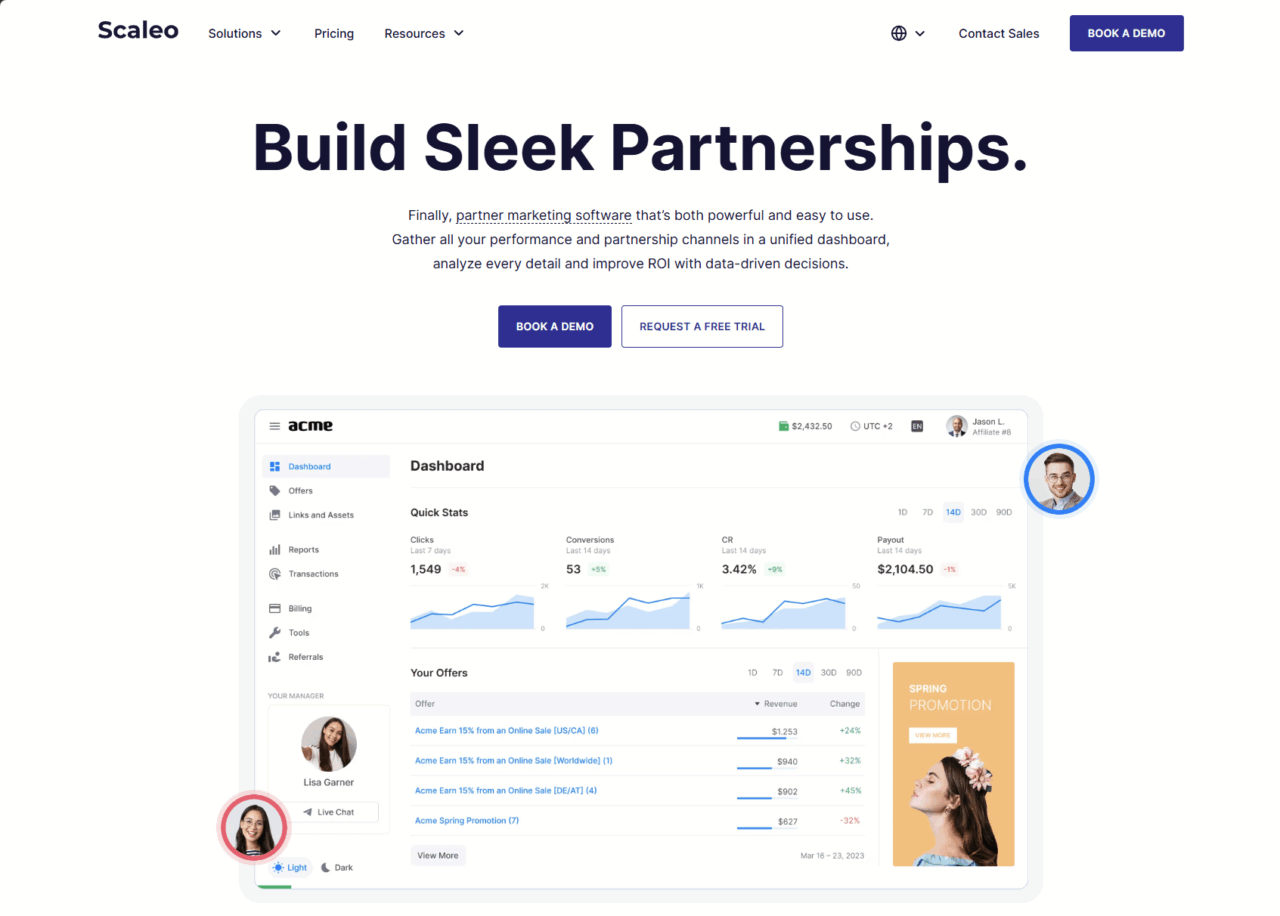
Scaleo is a standalone SaaS affiliate platform purpose-built for iGaming-style performance marketing. Its architecture prioritizes server-to-server tracking, rule-based commission validation, and fraud prevention — the three operational pillars that matter most in high-stakes gambling affiliate campaigns. Scaleo supports CPA, RevShare, and hybrid commission setups, and its users have reported measurable lifts in first-time depositors through its multi-tier sub-affiliate referral functionality. It is particularly well-suited to operators and performance networks that need a rigorous, configurable system rather than a simplified out-of-the-box solution.

Affise is a performance marketing platform that serves multiple verticals, including iGaming. Its iGaming-specific capabilities include an NGR-focused reporting dashboard, customizable KPI tracking for registrations and deposits, and conversion-type segregation that lets affiliates and operators see registration and deposit performance separately rather than as an aggregated number. Affise’s iGaming report configuration comes with pre-defined templates that reduce setup time for standard gambling metrics.
Choosing the Right Platform: Operator vs. Affiliate Perspective
The choice of platform depends significantly on which side of the relationship you occupy.
As an operator, you need software that manages your entire affiliate program: onboarding partners, distributing creatives, tracking player referrals at the individual level, calculating net gaming revenue, enforcing commission rules, and processing payments. Affilka, PartnerMatrix, Income Access, and Scaleo are all built for this use case.
As an affiliate, your priority is aggregating performance data from multiple operator programs and traffic sources into a coherent picture you can optimize against. Voluum and similar affiliate-side trackers excel here, giving you unified reporting across all your campaigns regardless of which operator affiliate systems they run through.
Some affiliates also work through dedicated iGaming affiliate networks — platforms like Income Access’s network arm — which handle the operator relationships, tracking, and payments centrally, allowing affiliates to focus purely on traffic generation.
Top iGaming Affiliate Networks and Affiliate Programs
The iGaming affiliate landscape includes two distinct tiers: direct affiliate programs run by individual operators, and affiliate networks that aggregate offers from multiple operators. Understanding both categories helps affiliates choose the right partnerships for their traffic type, geo-targeting, and commission preferences.
Direct Operator Affiliate Programs
These programs are run in-house by the operator and offer affiliates a direct relationship with the brand. They tend to offer the most competitive commission terms for high-volume partners and more flexibility for custom deal negotiations.
Bet365 Partners
One of the most recognized affiliate programs in global iGaming, Bet365 Partners offers up to 30% revenue share on net gaming revenue across both its sportsbook and casino products. The program is backed by a globally trusted brand with strong conversion rates, a comprehensive creative suite, real-time analytics, a dedicated affiliate management team, and a 45-day cookie window. Bet365’s expansion into regulated US markets and continued international growth make it one of the most stable long-term partnerships available. The program reported over 1.6 million new depositors from affiliate traffic in a recent year.
888 Affiliates
The affiliate program of 888 Holdings covers three distinct products — 888casino, 888poker, and 888sport — giving affiliates cross-sell opportunities across a player’s full gambling lifetime. Commission structures span CPA, revenue share, and hybrid models, and the program is well established in UK and European markets. The brand’s longevity and regulatory standing in multiple jurisdictions make it a trusted choice for affiliates targeting regulated market audiences.
Betway Partners
Betway Partners offers revenue share of up to 40% with no negative carryover — a significant benefit for affiliates in months where their referred players win more than they lose. The program is particularly strong in European, African, and Latin American markets, with multilingual support and localized marketing materials. Betway’s strong brand recognition in sports betting makes it well-suited for sports content affiliates targeting those regions.
Betsson Group Affiliates
Betsson Group runs one of the broadest affiliate programs in European iGaming, covering more than 20 brands including Betsson, Betsafe, and NordicBet. The program’s multi-brand structure gives affiliates the flexibility to promote different casino and sportsbook products to different audience segments, with commission rates typically starting at around 25% revenue share and scaling to 50% for top performers. Hybrid and CPA options are also available.
Pin-Up Partners
Pin-Up Partners has built a strong position in emerging markets across Eastern Europe, Latin America, and Asia. The program offers revenue share up to 50% and CPA between $25 and $50, with higher percentages for top-performing affiliates. Its flexible payout terms and focus on growth markets make it attractive for affiliates whose audiences are concentrated outside the traditional Tier-1 iGaming countries.
Parimatch Affiliates
A globally recognized program backed by Parimatch’s betting and casino platform. The program offers CPA up to $300 and revenue share up to 45%, with hybrid arrangements also available. Payments are made twice or once per month, and the program maintains strict standards on traffic quality — it prohibits fraud, spam, and incentivized traffic.
Affiliate Networks in iGaming
Affiliate networks aggregate offers from multiple operators, giving individual affiliates access to a curated marketplace of programs with centralized tracking, reporting, and payment processing. They are particularly useful for newer affiliates who want access to multiple offers before establishing direct operator relationships.
Income Access Network
As one of the oldest iGaming affiliate networks, Income Access provides a curated marketplace of operator offers across casino, sportsbook, poker, bingo, and lottery. Its network track record and established operator relationships make it a reliable starting point for affiliates entering the vertical.
Alpha Affiliates
Active since 2012, Alpha Affiliates has grown to over 15,000 partners across 50+ countries, with more than 2 million players attributed to its network. The program reported over €50 million paid to partners, and has achieved 20% year-over-year growth in new partner registrations. Its scale and established reputation make it one of the most credible multi-brand affiliate programs in European iGaming.
Growe Partners
Growe Partners operates across Europe, Africa, Asia, and Latin America, working with over 30,000 affiliates. It serves as the official advertiser in Africa, Asia, and Latin America for Parimatch, and offers exclusive deals for Latin American markets through JugaBet. Partners can choose between CPA, RevShare, and hybrid payment models.
Choosing the Right Program
The best affiliate program or network is ultimately determined by the match between your traffic’s geography, intent, and volume, and the operator’s market presence, commission structure, and player base. Affiliates with strong UK and European SEO traffic are well-served by programs like Bet365 Partners or 888 Affiliates, while those targeting emerging markets may find better traction with Pin-Up Partners or Growe Partners. For maximum earning potential, experienced affiliates typically maintain relationships with several programs simultaneously — testing different offers against their traffic to identify which converts and retains players most efficiently.
Diverse iGaming Niches and Opportunities
The iGaming vertical encompasses numerous sub-niches, each with distinct characteristics and marketing approaches:
Sports Betting
Currently the largest segment, especially in regulated markets like the United States. Affiliates can focus on specific sports, leagues, or betting types, partnering with sports influencers and creating content around major sporting events.
Sports betting offers plenty of opportunities for marketers to use recognizable team names and advertise using the angle of pure fun coming from enjoying a sports event. Unlike casinos, sports betting doesn’t have as bad a reputation and is more regulated.
Online Casinos
Featuring slots, table games, and live dealer experiences. This segment offers high player lifetime values and diverse promotional opportunities, from game reviews to strategy guides.
In the US especially, online casinos are often tied closely to their brick-and-mortar counterparts, where a standard casino offers its services online.
Poker and Skill Games
Attracting strategic players who value expertise and community. Affiliates often create educational content, host tournaments, and build engaged communities around these games.
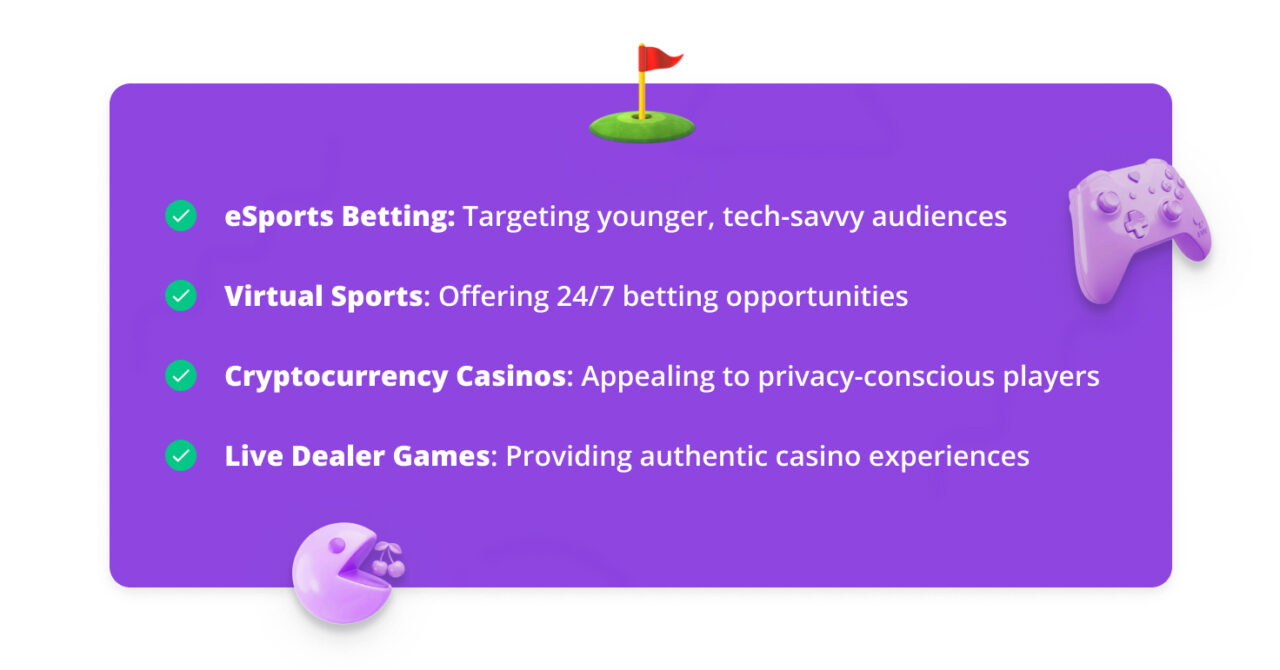
Emerging Segments
Responsible Gambling and Compliance Obligations for Affiliates
Responsible gambling has moved from a peripheral concern to a central obligation for iGaming affiliates operating in regulated markets. Regulators in the UK, Malta, Sweden, and several US states now hold affiliates to many of the same advertising standards as operators themselves — and failure to comply can result in program termination, financial penalties, or loss of access to licensed markets.
Understanding what responsible gambling compliance means in practice is no longer optional for affiliates serious about building a long-term business.
Age Verification and Audience Targeting
iGaming affiliates must not target advertising at minors. This obligation extends beyond simply including an age disclaimer on a webpage. It means using audience targeting tools that exclude underage demographics, avoiding partnerships with platforms or influencers whose audiences skew younger, and ensuring that all promotional materials clearly state the legal gambling age in the relevant jurisdiction. In regulated markets, regulators actively audit affiliate advertising for signs of youth-oriented content or channels.
Safe Gambling Messaging
Many regulated markets require affiliates to include responsible gambling messages in their promotional content — messages that encourage players to set limits, take breaks, or seek help if gambling becomes problematic. Links to resources such as national gambling helplines or self-exclusion schemes may be required. Affiliates promoting products to UK audiences, for example, must comply with the Advertising Standards Authority (ASA) guidelines, which include strict rules on the placement and prominence of responsible gambling messaging.
Prohibited Marketing Practices
Certain promotional tactics are banned outright in regulated markets. These typically include portraying gambling as a solution to financial problems, depicting gambling as risk-free, using celebrities or influencers who appeal primarily to minors, and making misleading claims about bonus offers or winning probabilities. Affiliates who violate these standards risk being blacklisted by compliant operators and potentially facing regulatory action.
Geo-Targeting and Jurisdictional Compliance
iGaming regulations differ substantially from one jurisdiction to the next. A bonus structure or promotional angle that is perfectly legal in Malta may be prohibited in Germany or the Netherlands. Affiliates who run multi-market campaigns must ensure their content complies with the most restrictive applicable regulation for each target geography. Geo-targeted landing pages and market-specific terms and conditions pages are standard practice among compliance-focused affiliates.
Self-Exclusion Schemes
Several jurisdictions operate centralized self-exclusion registries — such as GAMSTOP in the UK or GamStop-equivalent systems in other European markets — that allow players to exclude themselves from all licensed operators. Affiliates should be aware of these systems and must not knowingly target individuals who have self-excluded.
Long-Term Importance
As iGaming regulation continues to mature globally, compliance will increasingly become a competitive differentiator rather than just a legal obligation. Operators in regulated markets are progressively selective about which affiliates they work with, favoring partners who demonstrate responsible marketing practices and have taken steps to build compliant, sustainable businesses. Affiliates who invest in compliance infrastructure now are positioning themselves for the markets of the future.
Current Trends Shaping iGaming Affiliate Marketing
The direction of where the industry is heading is shaped by these trends listed below:
Mobile-First Approach
With mobile gambling projected to exceed $95 billion in revenue, affiliates must prioritize mobile-optimized content and user experiences. This includes responsive websites, mobile-specific bonuses, and app-focused promotional strategies.
AI and Personalization
Artificial intelligence is revolutionizing player targeting and campaign optimization. AI-powered tools help affiliates create personalized content, predict player behavior, and optimize marketing spend for maximum ROI.
Data-Driven Decision Making
Advanced analytics enable affiliates to track player behavior, identify high-value segments, and optimize their marketing funnels. Understanding metrics like player lifetime value, conversion rates, and retention becomes crucial for success.
Regulatory Compliance
As markets mature, compliance becomes increasingly important. Affiliates must understand local regulations, promote responsible gambling, and ensure their marketing practices meet legal requirements.
Challenges and Considerations
iGaming operates in a complex regulatory environment. Affiliates must navigate different laws across jurisdictions, maintain appropriate licenses, and ensure compliance with advertising standards.
Generally speaking, from a legal standpoint, there can be three situations:
The first situation is when an operator provides its services in a country that allows iGaming and has obtained the necessary license. The second situation is when an operator uses a global licence offered by popular iGaming safe havens like Malta or Gibraltar, and uses it in other countries where iGaming is not banned. The third situation is when a game is provided without acquiring any license. Getting a country or global licence is a costly process that can take months.
High Competition
The lucrative nature of iGaming attracts many marketers, creating intense competition for traffic and players. Success requires differentiation through unique content, superior user experience, or specialized expertise.
Player Quality Focus
Operators increasingly prioritize player lifetime value over volume, requiring affiliates to focus on attracting engaged, high-value players rather than just generating leads.
Technical Requirements
Effective iGaming affiliate marketing requires sophisticated tracking and attribution systems to accurately measure performance across multiple touchpoints and customer journeys.
Tracking and Attribution Platforms
Professional tracking solutions like Voluum provide the advanced attribution capabilities essential for iGaming affiliate success. These platforms offer real-time analytics, conversion tracking across multiple channels, and sophisticated reporting features that help affiliates optimize their campaigns and maximize ROI.
In such a fragmented industry like iGaming, data consolidation is key. Voluum enables gaming affiliate marketers to get a bird’s eye view of their efforts, pulling data from operators and ad networks, and unlocking hidden optimization opportunities.
Content Management Systems
Affiliates need robust websites capable of handling high traffic volumes while providing excellent user experiences across devices. They need to create different variants of web pages in short time, and polish their content with SEO techniques.
Marketing Automation
Email marketing platforms, social media management tools, and automated campaign optimization systems help affiliates scale their operations efficiently. Voluum offers a powerful automation mechanism that is based on ‘if/then’ logic, which allows marketers to set up rules covering many aspects of running a digital marketing campaign: alerts, auto-bidding, bot notifications, auto-stop on traffic loss and so on.
Analytics and Reporting
Beyond basic tracking, successful affiliates use advanced analytics to understand player behavior, identify trends, and make data-driven optimization decisions.
Best Practices for iGaming Affiliate Success
iGaming affiliate marketing is out of its infancy but still away from more mature verticals, where affiliates have their own communities, best practices, and technological standards. That’s why it is essential to follow these best practices below in order to build a better business environment.
Build Trust and Authority
Establish credibility through transparent reviews, accurate information, and responsible gambling advocacy. Trust is paramount in an industry where players risk real money.
Focus on Content Quality
Create valuable, engaging content that serves your audience’s needs while subtly promoting relevant offers. This includes game guides, strategy articles, industry news, and comparative reviews.
Optimize for Mobile
Ensure all content and promotional materials provide excellent mobile experiences, as mobile gaming continues to dominate the market.
Diversify Traffic Sources
Avoid over-reliance on single traffic sources by developing multiple acquisition channels, including SEO, paid advertising, social media, and email marketing.
Monitor Performance Continuously
Use sophisticated tracking tools to monitor campaign performance, player behavior, and market trends, adjusting strategies based on data insights.
Getting Started: A Practical Roadmap for New iGaming Affiliates
Breaking into iGaming affiliate marketing can feel overwhelming given the number of moving parts involved — platforms, commission models, traffic channels, regulatory requirements, and program applications all compete for attention simultaneously. Approaching the process in a structured sequence makes it considerably more manageable.
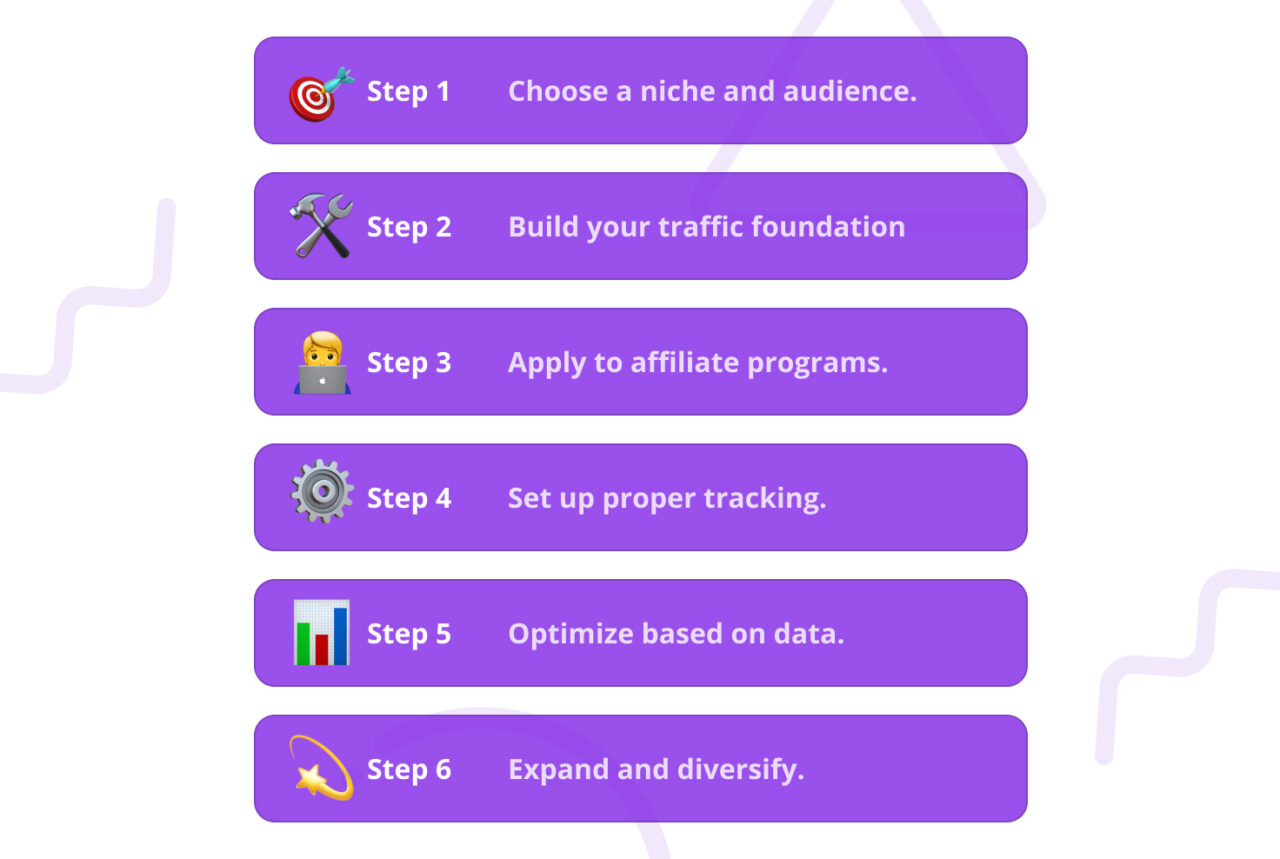
Step 1: Choose a niche and audience.
Rather than attempting to cover all of iGaming from day one, new affiliates almost always perform better by specializing. This might mean focusing on sports betting for a specific league or sport, reviewing online slots for a particular regional audience, or building educational content around poker strategy. A narrowly defined niche is easier to rank for in search, easier to build authority around, and easier to match with affiliate programs that serve that specific audience.
Step 2: Build your traffic foundation.
Decide which primary traffic channel you will invest in first. For most affiliates with limited budgets, this means SEO-driven content — creating a website with well-researched, genuinely useful articles targeting queries your future audience is already searching for. If you have paid advertising experience and a meaningful testing budget, paid traffic channels can work in parallel. Building on a single channel until it is producing meaningful results before expanding reduces the risk of spreading effort too thin too early.
Step 3: Apply to affiliate programs.
Most direct operator programs and major affiliate networks have an application process. Be prepared to share your website, describe your traffic sources, and explain how you intend to promote the operator’s products. Programs in regulated markets are increasingly selective about their affiliate partners, so having at least a basic content presence before applying significantly improves acceptance rates.
Step 4: Set up proper tracking.
Even at the start, putting professional tracking in place pays dividends quickly. Understanding which content, traffic source, or promotional angle is generating referrals — and which is not — is impossible without tracking. Tools like Voluum provide this infrastructure for affiliates managing multiple campaigns and traffic sources.
Step 5: Optimize based on data.
Once campaigns are running and conversions are being tracked, the focus shifts to optimization. Which pages are generating registrations? Which traffic sources are producing depositing players versus registrations that never convert? Are certain geos over- or under-performing relative to the effort invested? The answers to these questions, available through proper tracking and analytics, drive the marginal improvements that separate successful iGaming affiliates from those who plateau early.
Step 6: Expand and diversify.
As initial campaigns become profitable and predictable, expand into adjacent niches, additional traffic channels, or new geographic markets. Building relationships with dedicated affiliate managers at your primary operator programs can open access to better commission terms, exclusive promotions, and early information about new market opportunities.
The Future of iGaming Affiliate Marketing
The iGaming affiliate marketing landscape is subject to similar changes that also influence other verticals and other realms of digital marketing. Yet, at the same time, it has a set of its own unique trends to watch. Here’s a rundown of where the industry is heading:
- Increased Integration of Cryptocurrency: Blockchain technology and digital currencies will play larger roles in both gaming and affiliate marketing
- Virtual and Augmented Reality: Immersive gaming experiences will create new promotional opportunities
- Enhanced Live Streaming: Real-time content and influencer partnerships will become more prevalent
- Sophisticated AI Applications: Machine learning will enable more precise targeting and personalization
Conclusion
iGaming affiliate marketing offers substantial opportunities for those willing to navigate its complexities. Success requires understanding the diverse ecosystem, staying current with regulations, focusing on player quality, and leveraging advanced tools and technologies.
For affiliates serious about maximizing their iGaming performance, investing in professional tracking and attribution tools like Voluum becomes essential. These platforms provide the sophisticated analytics and optimization capabilities necessary to compete effectively in this dynamic, high-reward vertical.
Get Voluum and out-optimize your competition



 Facebook
 Telegram