
Best Marketing Measurement Tools for Digital Advertising ROI (2026 Comparison)

Meta says your campaigns drove 120 purchases last week. Google claims 95. Your store recorded 160 orders in total, and the ROI slide in Monday’s meeting depends on which dashboard someone opened first.
That isn’t a reporting bug. Each platform measures itself, by its own rules, and none of them is built to tell you what your whole budget actually returned. That’s the job of marketing measurement tools, and they come in very different shapes.
Short answer: marketing measurement tools fall into five layers: ad trackers for real-time, click-level ROI; mobile measurement partners for app installs; multi-touch attribution for customer journeys; marketing mix modeling (MMM) for budget allocation across channels; and incrementality testing for causal proof. Most teams need two or three layers, not all five.
Disclosure: Voluum is our product. We reviewed it with the same template as every other tool here, limitations included.
How we compared the tools: we used each vendor’s own website, pricing page and documentation, checked in November 2026. Where a vendor doesn’t publish prices, we say so. This article compares measurement layers. For a head-to-head of trackers, see our ad tracking software comparison and our list of conversion tracking software.
Which Marketing Measurement Layer Do You Need?
Start with the question you need answered, not the tool. Each layer answers a different one, needs different data, and suits a different kind of team.
| Layer | Question it answers | Data it needs | Suits |
|---|---|---|---|
| Ad tracker | Which source, campaign, lander or offer is making money right now? | Clicks, costs and conversions joined by click ID | Media buyers, affiliates and agencies running many traffic sources |
| Mobile measurement partner (MMP) | Which campaign drove this app install and what happened in the app? | SDK data from the app, ad network postbacks | App marketers |
| Multi-touch attribution (MTA) | How should credit for a sale be split across touchpoints? | Pixel or first-party journey data, orders | E-commerce brands with several paid channels |
| Marketing mix modeling (MMM) | How should next quarter’s budget be split across channels? | Long history of aggregated spend and sales (often two years or more), plus outside factors | Brands with large, multi-channel budgets, including offline media |
| Incrementality testing | Did this channel cause sales that wouldn’t have happened anyway? | Controlled experiments, often geo holdouts | Teams spending enough to power a test and settle a budget debate |
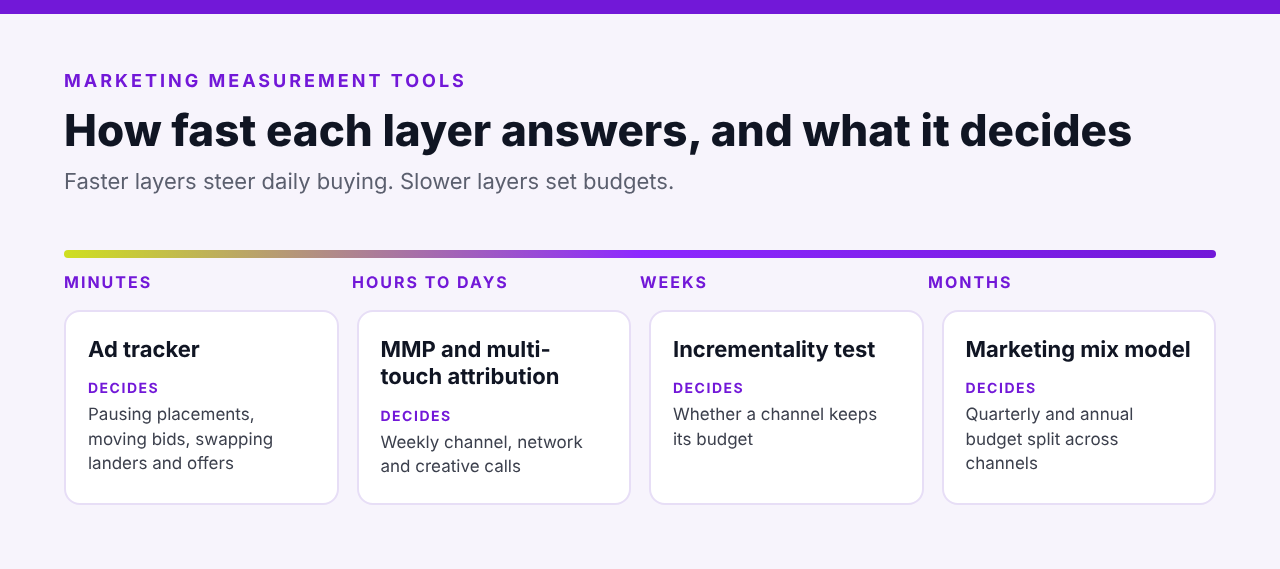
The layers also work at different speeds. An ad tracker reports within minutes, so it drives daily decisions: pausing a placement, moving bids, swapping a lander. MMPs and MTA tools report within hours to days and shape weekly channel and creative calls. An incrementality test needs weeks to reach a result and settles whether a channel keeps its budget. An MMM learns from months or years of history and sets the quarterly or annual split across channels. Neither changes today’s bids. Our explainer on attribution models covers the rules MTA tools apply.
Ad Trackers: Real-Time ROI Tracking by Click
Ad trackers assign every click an ID, record the visit, and match conversions to it by postback or pixel. Because they also pull costs from traffic sources, they show ROI by source, campaign, placement and offer while the campaign is still running. That’s why media buyers and affiliates treat them as their day-to-day source of truth.
Voluum

Voluum is a cloud ad tracker for teams buying traffic from many sources. It tracks by redirect or direct tracking script, receives conversions by S2S postback, and pulls cost from integrated sources, so ROI is visible per campaign, lander, offer and placement in real time. Automizer adds rules that pause, adjust bids or alert you, and Voluum MCP lets the AI assistant you already use query your data.
Best for: media buyers, affiliates, performance agencies and iGaming teams running many traffic sources at once.
Pricing (checked November 2026): from $149 per month on Voluum’s pricing page, with event limits per plan.
Limitation: Voluum measures click-based performance. It isn’t a marketing mix model, and as of November 2026 it has no native cohort view, so lifetime-value cohorts are built in a BI tool or CRM.
RedTrack
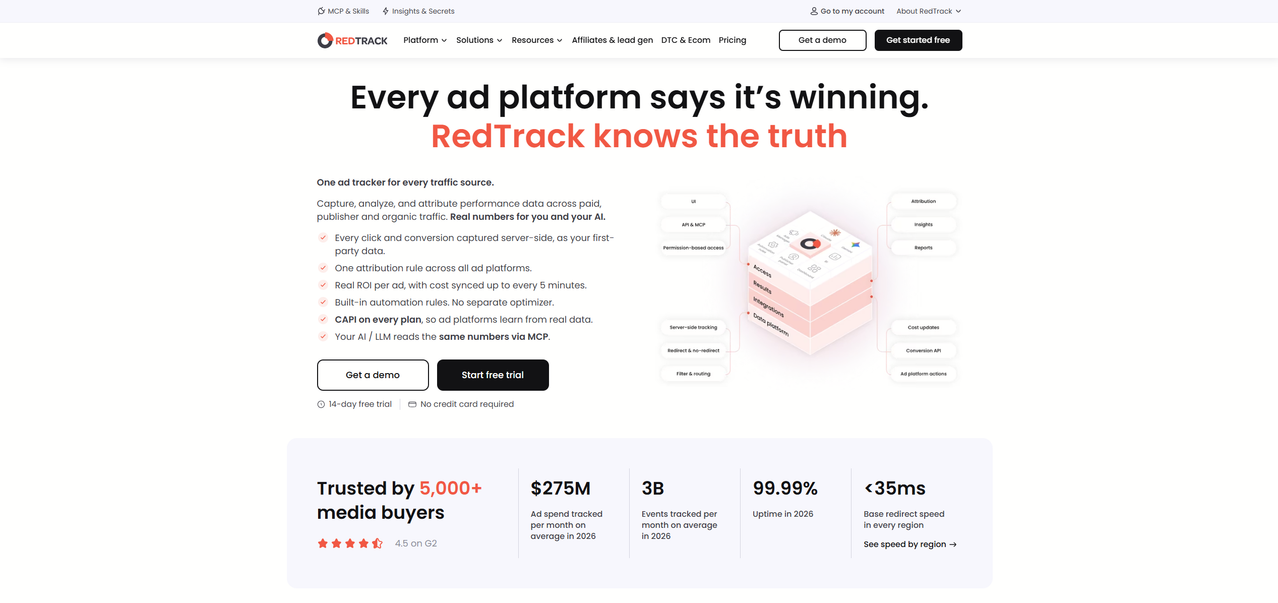
RedTrack covers similar ground: redirect and no-redirect tracking, postbacks, cost integrations and conversion API connections to ad platforms. It also sells separate plans for e-commerce brands alongside its plans for affiliates and agencies.
Best for: affiliates and advertisers who want one tracker across ad and e-commerce funnels.
Pricing (checked November 2026): from $169 per month on monthly billing, per RedTrack’s pricing page.
Limitation: like any ad tracker, RedTrack measures tracked clicks and conversions. It won’t tell you whether a channel’s sales were incremental.
If you’re choosing between trackers, our attribution accuracy benchmark explains how to test two of them on the same traffic.
Mobile Measurement Partners: When the Conversion Happens in an App
If your campaigns drive app installs, a web tracker sees the click but not what happens inside the app. MMPs fill that gap with an SDK in the app that matches installs and in-app events to the ads behind them. Our guide to mobile attribution covers the basics.
AppsFlyer

AppsFlyer is one of the most widely used MMPs. It attributes installs and in-app events across ad networks, reports cohorts and lifetime value, and offers fraud protection and deep linking. A separate Web SDK covers website measurement.
Best for: app marketers who buy installs across many networks.
Pricing (checked November 2026): according to AppsFlyer’s plan documentation, new accounts start with 12,000 free measured conversions or one year, whichever ends first. The free Zero plan then measures engagement only, the pay-as-you-go Growth plan is billed per conversion ($0.07 each on its pricing page), and Enterprise is quoted.
Limitation: the free plan doesn’t measure attribution, and per-conversion costs grow with volume, so model your expected installs before you commit.
Adjust
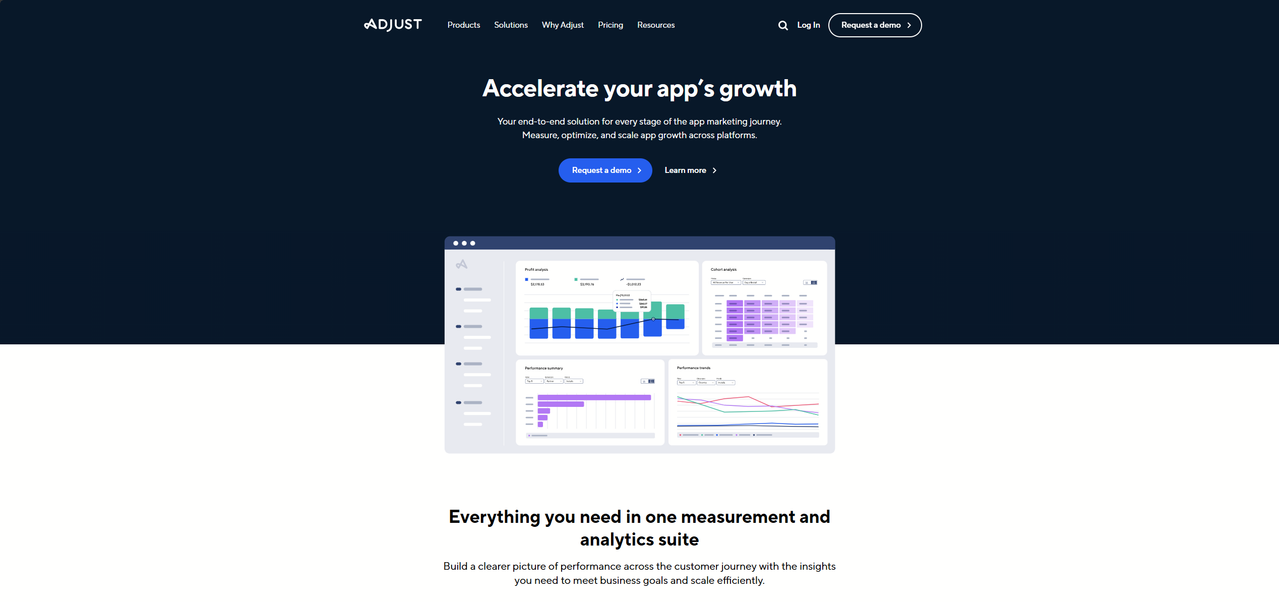
Adjust offers mobile attribution, analytics, fraud prevention and deep linking, with add-ons such as web attribution sold on top of its Core and Enterprise plans.
Best for: app teams that want an MMP with volume-based plans and strong fraud tools.
Pricing (checked November 2026): Adjust’s pricing page lists a Base plan for small independent developers (up to 1,500 attributions), Core (up to 250,000) and Enterprise above that. Core and Enterprise prices aren’t published.
Limitation: like any MMP, Adjust is built for app conversions. For web funnels, you’ll still need a web tracker or Adjust’s web add-on.
Multi-Touch Attribution: Splitting Credit Across the Journey
MTA tools follow a customer across touchpoints with their own pixel and first-party data, then split credit for each order across the ads that preceded it. They answer the “who gets credit” question better than platform dashboards, which each claim the whole sale. They don’t prove that an ad caused a sale, though. They describe journeys.
Triple Whale
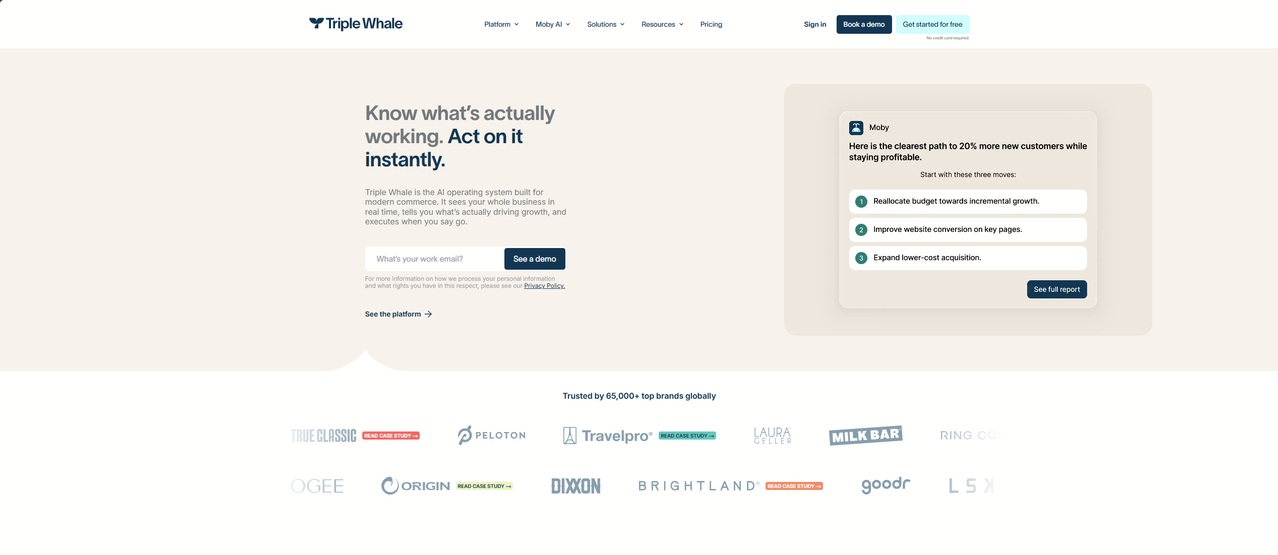
Triple Whale combines its Triple Pixel, multi-touch attribution and e-commerce BI dashboards with Moby, its AI operator. The Enterprise package adds Compass, which brings MTA, MMM and incrementality testing together.
Best for: Shopify and e-commerce brands that want attribution and reporting in one place.
Pricing (checked November 2026): Triple Whale’s pricing page lists a Free plan with first- and last-click attribution, and Foundation, Automate and Enterprise plans priced on a combination of annual GMV and package. Paid prices are quoted, not listed.
Limitation: it’s built for e-commerce stores. Affiliate or lead gen funnels that convert on someone else’s site are outside its core use case.
Northbeam

Northbeam offers first-party multi-touch attribution with view-through conversions, plus optional MMM and incrementality on higher plans. It positions itself for e-commerce brands spending heavily across several ad channels.
Best for: e-commerce brands spending seriously on several ad platforms.
Pricing (checked November 2026): Northbeam’s pricing page lists Starter from $1,500 per month (for brands spending under $1.5M a year on ads) and Professional from $3,500 per month. Growth and Enterprise are quoted, and actual prices scale with pageview volume.
Limitation: the entry price assumes a substantial ad budget, and the Starter plan connects directly to Shopify only.
Marketing Mix Modeling: Measuring Marketing ROI Across Channels
MMM works from aggregated weekly spend and sales, not individual clicks. It estimates how much each channel, including offline media, contributed to sales while accounting for seasonality, pricing and promotions. That makes it privacy-friendly and useful for budget planning, but it needs plenty of history and isn’t built for this week’s optimization.
Google Meridian

Meridian is Google’s open-source MMM, opened to everyone in January 2025. It uses Bayesian causal inference, can be calibrated with experiment results, and accounts for reach and frequency, not only impressions.
Best for: teams with data science capacity, or a certified partner, who want a transparent model they control.
Pricing (checked November 2026): free and open source. The real cost is the people and time needed to build, validate and maintain the model.
Limitation: you need clean historical data and modeling skills. It’s a framework, not a ready dashboard.
Meta Robyn
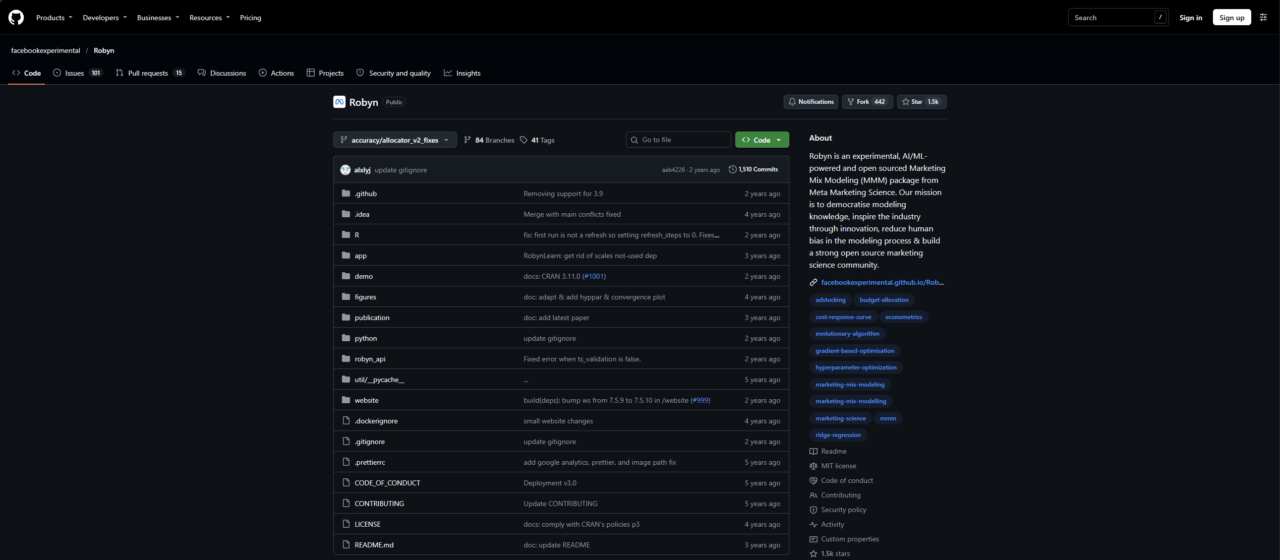
Robyn is Meta Marketing Science’s open-source MMM package, available in R with a Python version. It automates much of the modeling and lets you calibrate results with lift studies or geo experiments.
Best for: analysts who want a free, semi-automated MMM and a large user community.
Pricing (checked November 2026): free under the MIT license.
Limitation: like Meridian, it needs historical data and someone who can judge model quality. Results depend heavily on the inputs.
Recast
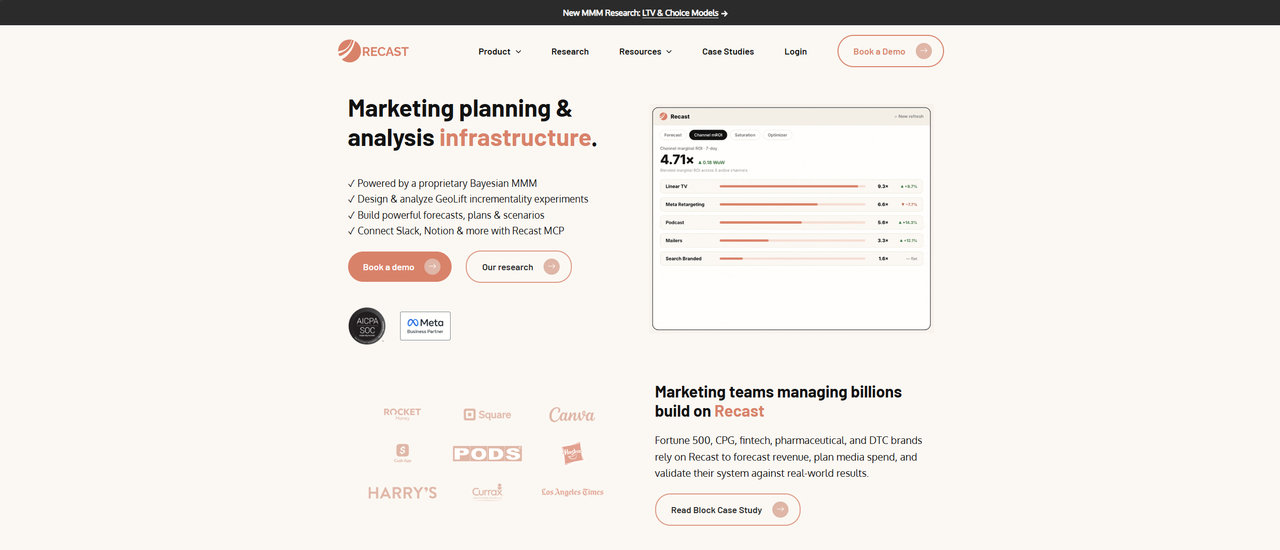
Recast is a commercial Bayesian MMM platform that updates models weekly and checks forecasts against actual results, so the model doesn’t go stale between annual refreshes.
Best for: brands that want MMM without building and maintaining it in-house.
Pricing (checked November 2026): not published. Recast quotes after a demo.
Limitation: it’s aimed at larger budgets, and like every MMM, it’s a planning tool rather than a daily optimization tool.
Incrementality Testing: Proving What Actually Caused Sales
Incrementality tests compare a group that sees your ads with a holdout that doesn’t, often by region. The difference is the lift your marketing caused. It’s the most direct answer to “would these sales have happened anyway?”, and many teams use it to calibrate their MMM or attribution. Our guide to incrementality testing includes a simple test design you can run yourself.
Haus
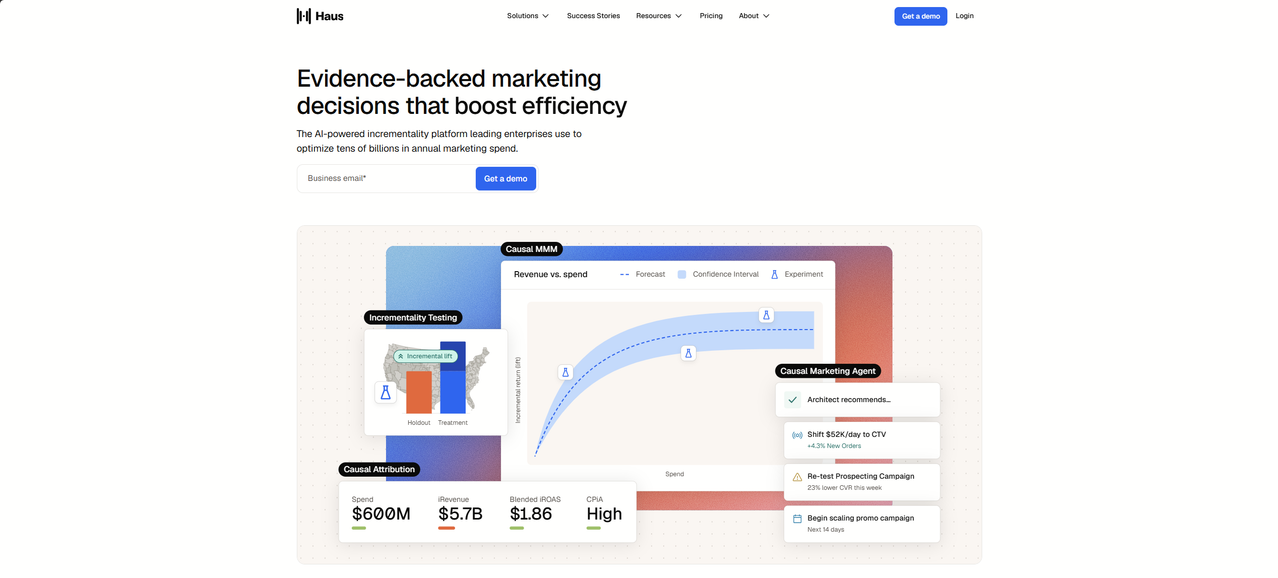
Haus is built around GeoLift, its geo-experiment product, and adds causal attribution and an incrementality-based MMM. It positions itself for enterprise teams that want experiments to settle budget questions across channels.
Best for: brands spending enough on several channels to power regular geo tests.
Pricing (checked November 2026): not published. Haus quotes after a demo.
Limitation: each test needs enough budget and time to detect a lift, so it can’t answer daily questions.
Measured
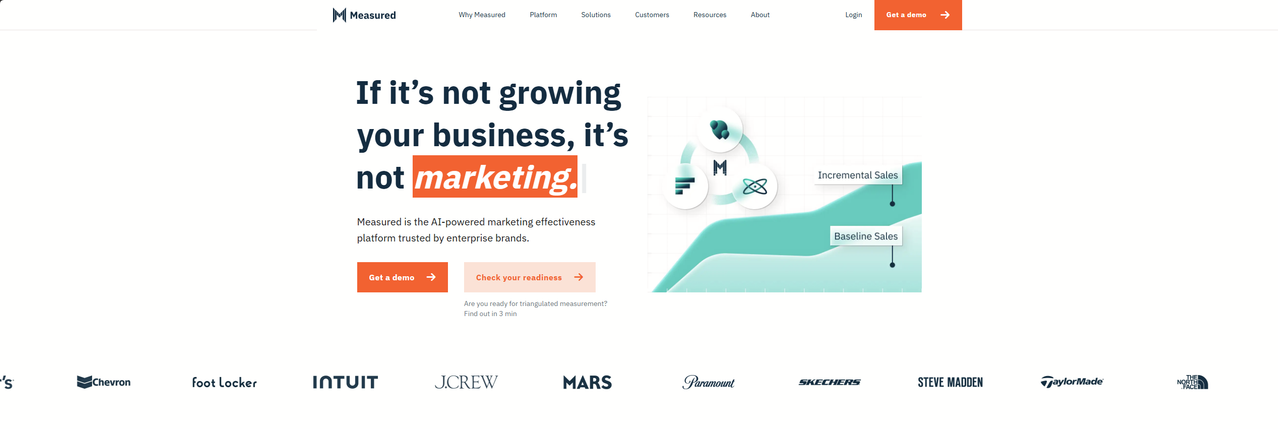
Measured combines geo-based incrementality testing with modern MMM and a cross-channel reporting dashboard, so experiment results feed straight into budget recommendations.
Best for: marketing and finance teams that want testing and MMM from one vendor.
Pricing (checked November 2026): not published. Measured quotes after a demo.
Limitation: like Haus, it’s an investment that pays off at larger, multi-channel budgets.
How the Layers Fit Together
You don’t need every layer. Here’s how three typical teams combine them:
A performance agency buying from many traffic sources runs an ad tracker as the daily source of truth and adds an incrementality test when a big channel’s budget is up for debate. MMM rarely fits, because campaigns change too fast for weekly aggregates to keep up.
An e-commerce brand on Meta, Google and TikTok uses MTA for weekly channel and creative decisions, then an MMM or incrementality tests once spend is large enough to justify them. Many keep an ad tracker for affiliate or partner traffic that MTA tools don’t cover well.
An app advertiser needs an MMP first, because no web tool sees in-app events. Incrementality tests come next, to check which networks bring installs that wouldn’t have happened organically.
Whichever stack you build, the numbers still need a common definition of success. Agree on the KPIs first, using a list like our affiliate marketing KPIs, so every layer measures the same thing.
Where Voluum Fits
Voluum covers the first layer: real-time ROI tracking by click across every traffic source you buy from, with costs, conversions and automation in one place. If your team makes daily decisions about sources, placements, landers and offers, that’s the layer that pays for itself first. With Voluum MCP, you can also put that data in front of the AI assistant you already use.
What Voluum doesn’t do is model offline media, estimate incrementality, or plan next year’s budget. For those questions, pair it with an MMM or an incrementality tool from the lists above.
Compare Voluum Plans
If you need click-level ROI across many traffic sources, see Voluum’s plans and pricing. Prices are on the page, and the 14-day platform preview doesn’t ask for payment details.
Frequently Asked Questions
What are marketing measurement tools?
Marketing measurement tools show what your marketing spend returned. They fall into five layers: ad trackers for real-time ROI by click, mobile measurement partners for app installs, multi-touch attribution for customer journeys, marketing mix modeling for budget allocation across channels, and incrementality testing for causal proof. Each answers a different question, so most teams combine two or three of them.
How do you calculate marketing ROI?
Marketing ROI is the revenue or profit marketing generated, minus what it cost, divided by that cost. For example, $15,000 in revenue from $10,000 in spend is a 50% ROI. The hard part is the revenue side: decide which tool’s attributed revenue you trust, and use profit rather than revenue if margins differ across products.
What is ROI tracking?
ROI tracking means recording the cost and the return of each campaign at a level where you can act on it, such as source, campaign, placement or offer. Ad trackers do this by tying every conversion to the click that caused it and pulling costs from traffic sources, so ROI updates in near real time rather than at month end.
What is the difference between MMM and multi-touch attribution?
Multi-touch attribution follows individual customer journeys and splits credit for each sale across the touchpoints before it. Marketing mix modeling works from aggregated spend and sales over time to estimate each channel’s contribution, including offline media. MTA suits weekly channel and creative decisions, while MMM suits quarterly or annual budget planning.
Do I need MMM if I use an ad tracker?
Not usually. An ad tracker answers daily questions about sources, campaigns and offers, which is what most performance teams need. MMM becomes useful when you spend across many channels, including offline media, and need to plan budgets months ahead. Teams in between often run an incrementality test on their biggest channel instead.



 Facebook
 Telegram


